© Facebook nzherald.co.nz
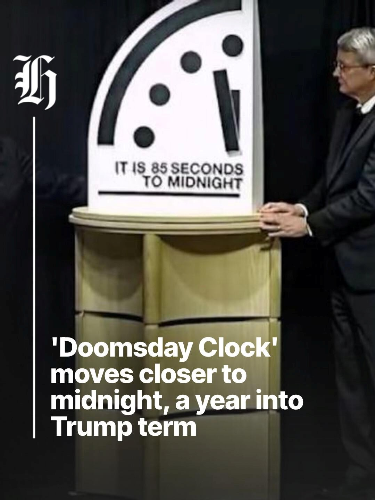
Експертна рада журналу Bulletin of the Atomic Scientists оголосила про нове переведення Годинника Судного дня — тепер він показує 85 секунд до півночі, що є найнебезпечнішим значенням за всю історію проєкту. Рішення було оприлюднене 27 січня під час публічної трансляції. За рік стрілки пересунули на чотири секунди ближче до умовного «кінця світу». Для порівняння, роком раніше зміна становила лише одну секунду. Президентка Bulletin of the Atomic Scientists Александра Белл пояснила, що людство не демонструє достатнього прогресу у зменшенні екзистенційних ризиків. За її словами, поєднання ядерної загрози, кліматичних змін і стрімкого розвитку технологій створює ситуацію, в якій кожна секунда має значення. Годинник Судного дня, наголосила вона, не є прогнозом, а інструментом попередження — сигналом про те, наскільки небезпечними стали створені самою людиною технології. Науковці підкреслюють, що ключову відповідальність за зниження глобальних ризиків несуть провідні держави, передусім США, Росія та Китай. Водночас вони закликають і громадянське суспільство тиснути на політичних лідерів, вимагаючи швидких і рішучих дій. Про зміну часу оголосила група авторитетних експертів, серед яких — лауреати Нобелівської премії, астрофізики, фізики, екологи та фахівці з глобальної безпеки й охорони здоров’я. Їхній спільний висновок: світ рухається небезпечним курсом, і зволікання лише посилює ризики.
Годинник Судного дня було створено у 1947 році вченими Чиказького університету, невдовзі після появи ядерної зброї. Відтоді він став одним із найвпізнаваніших символів глобальної вразливості. За майже вісім десятиліть існування проєкту положення стрілок змінювали 27 разів. Найдалі від півночі світ перебував у 1991 році, коли після домовленостей між США та СРСР стрілки відсунули на 17 хвилин.
«85 Seconds to Midnight»: The Doomsday Clock Moves Humanity Closer to the Edge
The expert board of the Bulletin of the Atomic Scientists has announced a new adjustment of the Doomsday Clock, which now stands at 85 seconds to midnight—the most dangerous setting in the project’s history. The decision was made public on 27 January during a live broadcast. Over the past year, the clock’s hands have moved four seconds closer to the symbolic “end of the world”. By comparison, the previous year saw a shift of just one second. Alexandra Bell, President of the Bulletin of the Atomic Scientists, explained that humanity has failed to make sufficient progress in reducing existential risks. According to her, the convergence of nuclear threats, climate change and the rapid development of new technologies has created a situation in which every second counts. The Doomsday Clock, she emphasised, is not a prediction but a warning tool—a signal of how dangerous the technologies created by humanity itself have become. Scientists stress that primary responsibility for reducing global risks lies with leading states, above all the United States, Russia and China. At the same time, they urge civil society to put pressure on political leaders and demand swift and decisive action. The change was announced by a group of leading experts, including Nobel Prize laureates, astrophysicists, physicists, environmental scientists, and specialists in global security and public health. Their shared conclusion is that the world is on a dangerous trajectory, and that delay only heightens the risks. The Doomsday Clock was created in 1947 by scientists at the University of Chicago, shortly after the advent of nuclear weapons. Since then, it has become one of the most recognisable symbols of global vulnerability. Over nearly eight decades, the clock’s setting has been changed 27 times. The world was farthest from midnight in 1991, when agreements between the United States and the Soviet Union to reduce nuclear arsenals pushed the hands back by 17 minutes.
3001