© www.fallesandorra.com
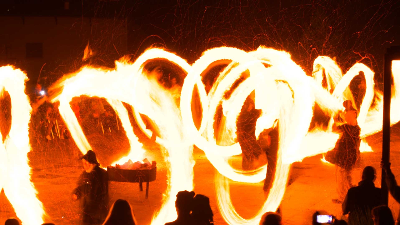
В Андоррі розпочалася підготовка до одного з найвидовищніших свят Піренеїв — фестивалю Falles, який щороку відбувається час святкування Святого Івана. Цього року особливу увагу в країні привернула молодіжна школа fallaires — спільнота підлітків і молодих учасників, які вивчають техніку роботи з вогнем та відроджують давню традицію вогняних ритуалів. У містах Андорра-ла-Велья, Ескальдес-Енгордань, Ордіно та Канільйо вже проходять вечірні тренування: молоді учасники вчаться розкручувати палаючі falles — спеціальні смолоскипи, що створюють у темряві величезні вогняні кола. Історично Falles були насамперед дитячою та молодіжною традицією. У минулому багаття розпалювали просто на площах і в селах, а діти бігали довкола вогню, котили палаючі конструкції та змагалися між собою — хто довше втримує вогонь або спалить більше falles. В Андорра-ла-Вельї навіть існували своєрідні суперництва між районами міста.
У деяких гірських поселеннях, зокрема в Ле-Бонс-і-ла-Москера та Сорнасі, діти спускалися з пагорбів до центральної площі, обертаючи палаючі falles просто під час бігу. Згодом, коли підлітки дорослішали, традиція поступово почала зникати. Її відродили лише у 1987 році молоді ентузіасти з Андорра-ла-Вельї, після чого Falles перетворилися на масштабний фестиваль і для дорослих. Кожне місто Андорри має власний колір і стиль: в Андорра-ла-Вельї носять бузкові плащі, у Сан-Жулія-де-Лорія — червоні, в Ескальдес-Енгордані та Енкампі — чорні, в Ордіно — чорно-коричневі, у Канільйо — костюми з арлекіновими візерунками, а в Ла-Массані — сині. Саме передача традиції молодому поколінню стала однією з причин, чому ЮНЕСКО внесла «Свята вогню літнього сонцестояння в Піренеях» до списку нематеріальної культурної спадщини людства. Для ЮНЕСКО Falles є прикладом живої культури, що передається не через музеї, а через громади, родини та локальні молодіжні об’єднання.
Night of Fire in the Pyrenees: Andorra Prepares for the Falles Festival
Preparations are underway in Andorra for one of the most spectacular celebrations in the Pyrenees — the Falles festival, traditionally held during the Feast of Saint John. This year, particular attention has focused on the young fallaires school, a community of teenagers and young participants learning fire-handling techniques while reviving an ancient ritual tradition.In Andorra la Vella, Escaldes-Engordany, Ordino and Canillo, evening training sessions are already taking place, with young participants practising how to spin burning falles — flaming torches that create huge circles of fire in the dark.Historically, Falles was primarily a children’s and youth tradition. Bonfires were once lit in village squares, where children ran around the flames, rolled burning constructions through the streets and competed to see who could keep the fire burning longest. In Andorra la Vella, rivalries even developed between different neighbourhoods of the city.
In mountain villages such as Les Bons i la Mosquera and Sornàs, children would run downhill towards the central square while spinning burning falles. Over time, the tradition nearly disappeared, before being revived in 1987 by a group of young people from Andorra la Vella, transforming Falles into a large-scale festival celebrated by all generations.Each Andorran town now has its own distinctive colours and costumes for the fallaires: lilac capes in Andorra la Vella, red in Sant Julià de Lòria, black in Escaldes-Engordany and Encamp, black-and-brown in Ordino, harlequin-patterned costumes in Canillo and blue in La Massana.The transmission of the tradition to younger generations was one of the reasons why UNESCO added the “Fire Festivals of the Summer Solstice in the Pyrenees” to its Representative List of the Intangible Cultural Heritage of Humanity.
1923