© Foto: Claudio Bresciani/TT
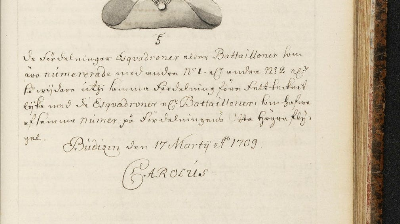
У Швеції дослідниця Антуанета Гранбер — доцентка та викладачка слов’янських мов Гетеборзького університету — випадково виявила раніше невідомий рукопис: польову книгу короля Карла XII, що містить записи й ілюстрації періоду Північної війни (1707–1717). Про знахідку наприкінці грудня 2025 року повідомили шведські медіа. Рукопис обсягом 268 сторінок оправлений у зношену шкіряну палітурку з позолоченим написом на корінці. Він містить докладні тактичні замальовки, креслення та схеми розташування військ. Окремі розділи були написані безпосередньо напередодні Полтавської битви навесні 1709 року, зокрема в місцевості поблизу сучасної Полтави. Частина розділів має підписи самого Карла XII — він підписувався як Carolus або латинською абревіатурою L.S. (Loco Sigilli, «замість печатки»), що свідчить про офіційний характер цих записів. Окрім короля, до укладання книги долучилися його найближчий радник Карл Пайпер, а також Самуель Окергієльм — високопосадовець королівської канцелярії. Рукопис було знайдено серед значного масиву неописаних матеріалів, що охоплюють документи від XIII до XIX століть. Перші записи в книзі датовані 2 червня 1707 року, останні — 20 листопада 1717 року, тобто за рік до смерті короля. Під час подальших пошуків виявили ще дві копії цієї книги в інших шведських архівах — у дворянській збірці Скоклостер та бібліотеці Лундського університету. Водночас саме фоліант із колекції Hvitfeldtska вирізняється унікальними ілюстраціями, відсутніми в інших примірниках. Шведські історики наголошують: хоча значна частина інформації про військові кампанії Карла XII вже відома, безпосередні польові нотатки самого короля — особливо щодо підготовки до Полтавської битви — є надзвичайно рідкісним джерелом. На їхню думку, такі матеріали дають змогу переосмислити перебіг Північної війни з позиції її безпосередніх учасників, а не лише пізніших хроністів чи офіційних звітів, а також глибше зрозуміти роль союзників, зокрема гетьмана Івана Мазепи, напередодні Полтави.
An Unknown Field Book of Charles XII Discovered in a Swedish University Library
In Sweden, researcher Antoaneta Granberg—a docent and lecturer in Slavic languages at the University of Gothenburg—has accidentally discovered a previously unknown manuscript: the field book of King Charles XII, containing notes and illustrations from the period of the Great Northern War (1707–1717). The discovery was reported by Swedish media in late December 2025. The manuscript comprises 268 pages and is bound in worn leather with a gilt inscription on the spine. It includes detailed tactical sketches, drawings, and diagrams of troop formations. Some sections were written immediately prior to the Battle of Poltava in the spring of 1709, including entries made in the area near present-day Poltava. Several chapters bear the signatures of Charles XII himself—signed as Carolus or with the Latin abbreviation L.S. ( , “in place of the seal”), indicating the official nature of the entries. In addition to the king, contributions were made by his closest adviser, Carl Piper, as well as Samuel Åkerhielm, a senior official of the royal chancery. The manuscript was found among a large body of uncatalogued materials spanning documents from the thirteenth to the nineteenth centuries. The earliest entries in the book date to 2 June 1707, while the latest are from 20 November 1717—one year before the king’s death. Further research revealed two additional copies of the field book in other Swedish archives: one in the noble Skokloster collection and another in the library of Lund University. However, the volume from the Hvitfeldtska collection stands out for its unique illustrations, which are absent from the other copies. Swedish historians emphasize that although much is already known about Charles XII’s military campaigns, the king’s own field notes—particularly those relating to preparations for the Battle of Poltava—are exceptionally rare. According to scholars, such sources make it possible to reassess the course of the Great Northern War from the perspective of its direct participants rather than later chroniclers or official reports, and to gain a deeper understanding of the role of allies, including Hetman Ivan Mazepa, on the eve of Poltava.
©
1889