© Facebook Българските корени
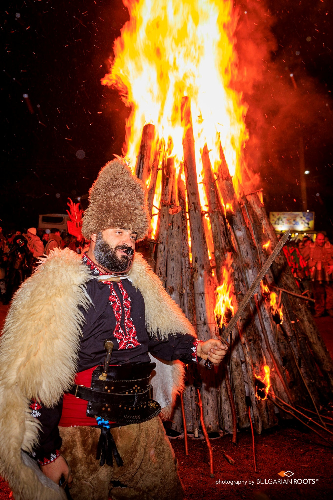
У болгарському місті Перник у другій половині січня відбувся міжнародний фестиваль маскарадних ігор Surva 2026 — одна з наймасштабніших подій нематеріальної культури Південно-Східної Європи. Захід тривав упродовж двох вікендів, 17–18 та 24–25 січня, і зібрав майже 13 000 учасників з Болгарії та понад 30 іноземних колективів із Європи, Північної Америки та Азії. Ювілейне, 32-ге видання фестивалю відзначило 60 років із часу першого проведення Surva у 1966-му та пройшло під патронатом ЮНЕСКО. Центральні вулиці Перника на кілька днів перетворилися на простір ритуального дійства. На вулиці вийшли персонажі, що символічно уособлюють силу, родючість і зв’язок людини з природою: кукери, сурвакари й мечкари в масках із дерева, шкіри та рогів, обвішані важкими чановими дзвонами, створили гучний, майже гіпнотичний звуковий ландшафт. Найбільший резонанс у медіа та соціальних мережах викликало відкриття фестивалю — масштабна музично-танцювальна вистава «Легенда про першого сурвакаря», поставлена на центральній площі міста. У ній понад 250 виконавців відтворили міфологічні мотиви та архаїчні обряди, що лежать в основі традиції Surva. Болгарські етнографи й мистецтвознавці наголошують, що Surva вважають одним із найдавніших шарів балканської культури, пов’язаним із дохристиянськими аграрними та сонячними культами. Маски та шумові ритуали мають символічно захищають громаду, «проганяють» зло й знаменують перехід до нового життєвого циклу. Водночас участь у маскарадних групах виконує важливу соціальну роль, передаючи знання й ідентичність між поколіннями. Саме ця поєднана функція — ритуальна, мистецька й соціальна — стала підставою для визнання Surva частиною нематеріальної культурної спадщини людства. Для ЮНЕСКО фестиваль є прикладом живої традиції, яка не законсервована в музеї, а продовжує розвиватися, зберігаючи символічну структуру в умовах сучасного світу.
When Bells Awaken Memory: Surva 2026 as Europe’s Living Language in Pernik
In the Bulgarian city of Pernik, the second half of January saw the staging of the international festival of masquerade games Surva 2026—one of the largest events dedicated to intangible cultural heritage in South-East Europe. Held over two consecutive weekends, 17–18 and 24–25 January, the festival brought together nearly 13,000 participants from Bulgaria and more than 30 international groups from Europe, North America and Asia. The jubilee 32nd edition marked sixty years since Surva was first held in 1966 and took place under the patronage of UNESCO. For several days, the central streets of Pernik were transformed into a space of ritual performance. Figures symbolically embodying strength, fertility and the bond between humanity and nature—kukeri, survakari and mechkari in masks made of wood, leather and horns, weighed down with heavy bells—filled the city with a loud, almost hypnotic soundscape. The moment that generated the greatest resonance in the media and on social networks was the festival’s opening: a large-scale music and dance spectacle entitled The Legend of the First Survakar, staged in the city’s main square. More than 250 performers brought to life mythological motifs and archaic rites that lie at the heart of the Surva tradition. Bulgarian ethnographers and art historians emphasise that Surva is regarded as one of the oldest layers of Balkan culture, rooted in pre-Christian agrarian and solar cults. Masks and noise rituals are believed to symbolically protect the community, “drive away” evil and mark the transition to a new life cycle. At the same time, participation in masquerade groups fulfils an important social function, transmitting knowledge and identity from one generation to the next. It is precisely this combined ritual, artistic and social role that has led to Surva’s recognition as part of humanity’s intangible cultural heritage. For UNESCO, the festival stands as an example of a living tradition—one not confined to museums, but continuing to evolve while preserving its symbolic structure in the contemporary world.
2575