©
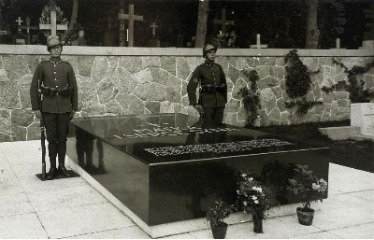
Перебуваючи якось у Вільнюсі в складі радянської літературної делегації, Арсеній Тарковський (1907–1989) не посоромився покласти квіти на могилу польського диктатора Юзефа Пілсудського (1867–1935), який похований там на території відомого некрополя Расу. Радянські всюдисущі наглядачі-літератори зажадали від поета пояснень. Тарковський відповів так:
— Мій батько заповідав мені шанувати пам’ять його друзів!
Довідка (Mark Le Fanu and Sally Laird):
"Гілка роду Андрія Тарковського, що походить з Тарковських, була спочатку польською та римо-католицькою і протягом багатьох поколінь проживала на Україні.[...] Найдавніший член родини, про якого є достовірні відомості, Войцек Тарковський, на початку XVIII століття переїхав із Любліна (Польща) до Заслава (нині Ізяслав) у Волинському повіті Хмельницької губернії на Західній Україні, що перебувала під польським пануванням. Зафіксовано, що він та його син Франц володіли селами Орлинець (нині - Орлинці) та Білинець. Рід Тарковських стає безперервним з часів нащадка Войцека Матвія (1780–1853), який також мешкав у Заславі, одружився з Юліанією Кардасевич і мав трьох синів, серед яких середній, Карл (нар. 1815), був прадідом Андрія Тарковського. На той час, внаслідок різних поділів Польщі, Україна була асимільована в російську державу. Дотримуючись сімейних традицій, Карл ще хлопчиком вступив до війська, а в 17 років перейшов до кадетського корпусу, звідки у 1850 році пішов у відставку у званні капітана кадетського корпусу. Після закінчення військової служби він став опорою місцевого драматичного товариства. Він, як і його батько, одружився з представницею роду Кардасевичів — Марією Каєтанівною — і виховав чотирьох дітей. У якийсь момент свого життя родина перейшла у православ’я, тим самим фактично ставши росіянами.
Як щойно зазначалося, сім’я цієї пари складалася з чотирьох дітей: трьох дівчаток і хлопчика. Хлопчик, Олександр Карлович Тарковський, дід Андрія Тарковського, був на дев’ять років молодший за свою найближчу сестру Віру. Коли йому виповнилося десять років, обоє його батьків померли від холери, тож осиротілий Олександр перейшов під опіку іншої, ще старшої сестри Надії разом із її чоловіком І. К. Тобілевичем, які забрали його на схід, щоб жити з ними в місті Єлизаветград (нині Кіровоград), на той час степовому поселенні, невеликому, але космополітичному, де мешкали українці, росіяни, поляки, євреї, німці та серби. Тобілевич, опікун Олександра, судячи з усього, був цікавою особистістю. Він обіймав посаду секретаря поліцейської комісії і, отже, був стовпом суспільства; але, як і його тесть Карл Матвійович Тарковський, він також був актором і, під псевдонімом Карпенко-Карий, драматургом, який писав п’єси, що симпатизували українській незалежності.
Після скасування кріпосного права в 1861 році та бурхливого десятиліття, що послідувало за цим (десятиліття повстань, описане Тургенєвим у його класичному романі «Батьки і сини»), у повітрі витала атмосфера соціального протесту.
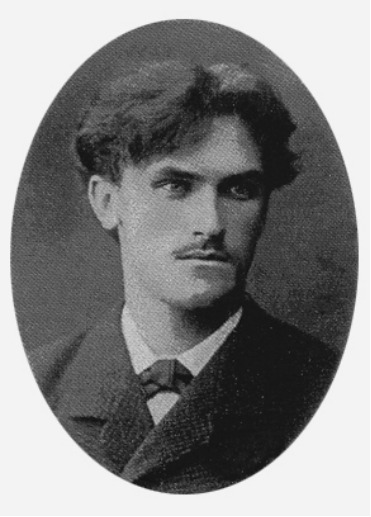
У технічному училищі в Єлісаветграді, куди відправили Олександра, працював талановитий директор Завадський, який заохочував дискусії на актуальні теми — серед яких, звісно, була й етика терористичних дій. Таємно розповсюджувалися газети різних політичних угруповань — «Земля і свобода», «Народна воля», «Чорний розподіл». У цій школі, а згодом і в студентських колах університетів Києва, Петербурга та Харкова, де він продовжив навчання на початку 1880-х років, Олександр ввібрав дух того часу. Як можна побачити на фотографії нижче, він був надзвичайно вродливим чоловіком, якого сучасники описували як «чесного, гордого та спраглого справедливості»: це було небезпечним тягарем для автократичної Росії.
Особиста кара настала в 1884 році, коли його притягли до суду в Одесі за «організацію публічних читань з метою підготовки до революційної діяльності» – звинувачення, яке, як виявилося, було справедливим і точним, оскільки Олександр на той час був «бібліотекарем» місцевої осередку найрадикальнішої з сучасних терористичних угруповань, «Народної волі». (Саме ця організація три роки тому, у березні 1881 року, вбила царя Олександра II.)
Потім він був засланий до Іркутська в Сибіру на п’ять років (1887–1892). За цей час Олександр, здається, змінив свої погляди. У Державному архіві України зберігається лист на дев’ятнадцять з половиною сторінок, написаний французькою мовою до Віктора Гюго (але так і не надісланий); у ньому він благає знаменитого поета заступитися за нього, обіцяючи, що не становить жодної загрози для існуючого суспільного ладу. Було б цікаво дізнатися більше про внутрішні переживання Олександра в такий вирішальний момент його життя та соціальних поглядів (сам лист, надрукований у мемуарах Марини, свідчить про його сильні страждання в одиночній камері, перед перспективою заслання, і містить розпачливі благання про допомогу, але майже нічого не говорить про моральність — чи аморальність — терористичних дій). Відомо, що після звільнення він повернувся до Єлісаветграда і, перебуваючи під наглядом царських властей, влаштувався на роботу секретарем голови місцевого земства. Згодом він був помічником бухгалтера, а потім бухгалтером у Міському громадському банку, ніколи не піднімаючись вище цих відносно незначних посад через своє бурхливе минуле. (Проте він продовжував писати вірші, статті та оповідання.)"
Arseny Tarkovsky honored the memory of the Polish dictator Piłsudski. Once, while in Vilnius as part of a Soviet literary delegation, Arseny Tarkovsky did not hesitate to lay flowers on the grave of Józef Piłsudski. On that occasion in Vilnius, as a member of the Soviet literary delegation, Arseny Tarkovsky (1907–1989) did not hesitate to place flowers on the grave of the Polish dictator Józef Piłsudski (1867–1935), who is buried there in the well-known Rasos cemetery. The ever-watchful Soviet literary overseers demanded an explanation from the poet. Tarkovsky replied:
— My father bequeathed to me the duty to honor the memory of his friends!
Note (Mark Le Fanu and Sally Laird):
Arseny Tarkovsky’s father, a Russian Narodnik who spent about eight years in prison, had been Piłsudski’s companion during Siberian exile.
The Tarkovsky branch of Andrei’s ancestry was originally Polish and Roman Catholic, settled for generations in the Ukraine. Contrary to what has sometimes been written, there is no Tarkovsky connection with Daghestan or the Caucusus – no “princely forbears”. The most remote family member of whom there is clear knowledge, Woyzcek Tarkovsky, moved from Lublin, in Poland, to Zaslav (today Izyiaslav) in the Wolyna district of the Khmelnytsky province of Polish-ruled Western Ukraine at the beginning of the 18th century. It is recorded that he and his son Frantz owned the villages of Orlinets and Bylinets: gentry figures therefore or (what amounts to the same) minor nobility. The titre de noblesse and privileges attached to this condition are contained in a document in Marina’s possession, written in Polish in 1803, confirming in passing that the family was still Roman Catholic. (Incidentally, the Tarkovskys were never serf-owners.)
The Tarkovsky line becomes continuous from the time of Woyzcek’s descendant Matvei (1780-1853), who also lived in Zaslav, married a certain Yulianiya Kardasevich and fathered three sons of whom the middle one, Karl (born 1815), was Andrei Tarkovsky’s great grandfather. By this time, as a result of the various partitions of Poland, the Ukraine had been assimilated into Russian sovereignty. Following family traditions Karl enrolled in the military as a boy, transferring at the age of 17 to the Cadets before retiring in 1850 with the rank of Captain of Cavalry. In his post-military life he became a pillar of the local dramatic society. He too, like his father, married a Kardasevich, Mariya Kaetanovna, and brought up four children. At some stage during his lifetime the family converted to Orthodoxy, becoming, in effect, Russians by doing so.
As just remarked, the family of this couple comprised four children, three girls and a boy. The boy, Aleksandr Karlovich Tarkovsky, Andrei Tarkovsky’s grandfather, was nine years younger than his closest sister, Vera. When he was ten years old both his parents died of cholera, so orphaned Aleksandr was transferred to the guardianship of another sister, even older, Nadezhda, together with her husband I. K. Tobilevich who took him eastwards to live with them in the town of Elisavetgrad (now Kirovohrad), at that time a steppe settlement, small but cosmopolitan, containing a mixture of Ukrainians, Russians, Poles, Jews, Germans and Serbs. Tobilevich, Aleksandr’s guardian, appears to have been an interesting character. He occupied the post of Secretary to the Police Commission, and was thus a pillar of society; but like his father-in-law Karl Matvievich Tarkovsky he was also an actor and, under the pen-name Karpenko-Karym, a dramatist who wrote plays sympathetic towards Ukrainian independence.
Following the abolition of serfdom in 1861 and the stormy decade that followed this (the decade of revolt recorded by Turgenev in his classic novel Fathers and Sons), social protest was much in the air. The technical school in Elisavetgrad to which Aleksandr was sent had a gifted headmaster, Zavadsky, who encouraged debate about issues of the day – issues that included, of course, the morality of terrorist action. Newspapers of the various social factions – Land and Freedom, People’s Will, Black Re-distribution – circulated clandestinely. At this school, and subsequently in student circles at the universities of Kiev, Petersburg and Kharkov where he went on to study in the early 1880s, Aleksandr imbibed the spirit of the times. A strikingly handsome figure as one can see from the photograph below, he is described by a contemporary as “honest, proud and thirsty for justice”: a dangerous burden to bear in autocratic Russia. Personal nemesis descended in 1884 when he was arraigned by the court in Odessa for “organizing public readings in preparation for revolutionary activity” – a just and accurate accusation as it happens, since Aleksandr at the time was “librarian” of the local cell of the most ultra of contemporary terrorist factions, the Narodnaya Volya (People’s Will). (It was this organisation that, three years previously, in March 1881, assassinated Tsar Aleksandr II.)
Exile followed to Irkutsk in Siberia for a period of five years (1887-1892). During this time Aleksandr appears to have undergone a change of heart. A nineteen and a half page letter written in French to Victor Hugo (but never sent) exists in the Ukraine State archive; in it he begs the famous poet to intercede on his behalf, promising that he poses no threat to the established social order. It would be interesting to know more about Aleksandr’s inner turmoil at such a crucial crisis in his life and social thought (the letter itself, printed in Marina’s memoir, records his intense suffering in solitary confinement, faced with the prospect of exile, and begs for help in heart-rending terms, but it says little about the morality – or immorality – of terrorist action). What is known is that on release he returned to Elisavetgrad and found employment, under Tsarist surveillance, as secretary to the head of the local zemstvo. Subsequently he was assistant accountant, and then accountant, at the City Public Bank, never rising above these relatively minor posts because of his chequered past. (Meanwhile, however, he did continue to write poems, articles and short stories.)
3110