© Nobel Prize
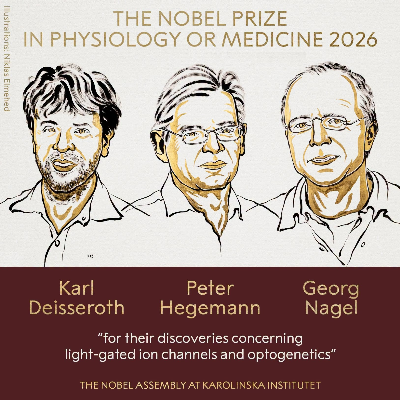
Нобелівську премію з фізіології або медицини 2026 року спільно отримали американський нейробіолог Карл Дайссерот (Karl Deisseroth) та німецькі вчені Пітер Хегеманн (Peter Hegemann) і Георг Нагель (Georg Nagel) — «за відкриття світлочутливих іонних каналів та оптогенетики». Їхні дослідження започаткували метод, який дає змогу за допомогою світла контролювати окремі нервові клітини та вивчати роботу мозку.
Nobel Prize
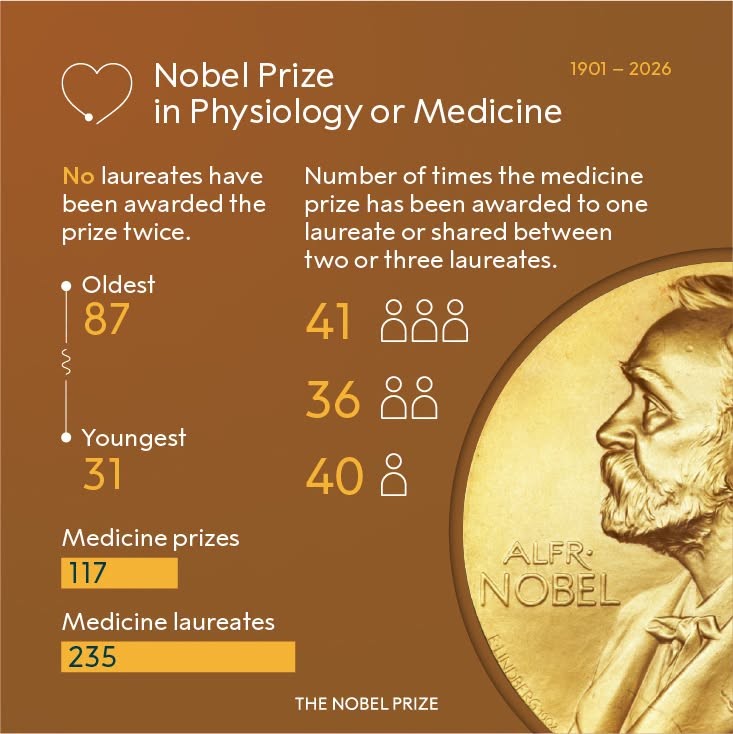
Премія відзначає відкриття, що змінило сучасну нейронауку. Хегеманн і Нагель у 1990-х роках досліджували, як одноклітинні водорості реагують на світло, і відкрили світлочутливі білки — каналродопсини. Пізніше Дайссерот перетворив це відкриття на практичний інструмент для керування активністю нейронів світлом. Оптогенетика дала вченим можливість значно точніше досліджувати механізми пам’яті, емоцій і поведінки, а в майбутньому може сприяти розробці нових методів лікування неврологічних і психічних захворювань. Це вже 41-й випадок, коли нагороду спільно присуджують трьом особам.

Томас Перлманн, секретар Нобелівського комітету з фізіології або медицини
Оголошення медичної премії 5 жовтня відкрило Нобелівський тиждень 2026 року. Імена номінантів на Нобелівську премію офіційно не розголошуються протягом 50 років, напередодні нагороди ЗМІ та експерти називають лише можливих претендентів. Наступними будуть оголошені лауреати з фізики, хімії, літератури, миру та економіки.
2026 Nobel Prize in Medicine awarded for pioneering work in optogenetics
The 2026 Nobel Prize in Physiology or Medicine has been jointly awarded to American neuroscientist Karl Deisseroth and German scientists Peter Hegemann and Georg Nagel for their discoveries of light-sensitive ion channels and their pioneering development of optogenetics. Their work made it possible to use light to control individual nerve cells, opening new ways to study how the brain works.
The prize recognizes research that has transformed modern neuroscience. In the 1990s, Hegemann and Nagel studied how single-celled algae respond to light and identified light-sensitive proteins known as channelrhodopsins. Deisseroth later helped turn these discoveries into a practical tool for controlling the activity of neurons with light. Optogenetics has enabled scientists to investigate the mechanisms underlying memory, emotions and behaviour with unprecedented precision and could eventually contribute to new treatments for neurological and psychiatric disorders.
The announcement of the medicine prize on October 5 opened the 2026 Nobel Prize week. The names of Nobel Prize nominees are kept secret for 50 years, so before the announcement, the media and experts can only discuss potential candidates rather than an official list of nominees. The Nobel Committee’s Secretary, Thomas Perlmann, announced this year’s medicine laureates. The prizes in physics, chemistry, literature and peace, followed by the Sveriges Riksbank Prize in Economic Sciences in Memory of Alfred Nobel, will be announced later this week.
79