© Facebook Marat Guelman
Напруження навколо бієнале у Венеції виникло задовго до офіційного відкриття. Повернення російського павільйону до публічного простору після років міжнародної ізоляції стало однією з найгостріших тем європейського культурного середовища ще на етапі підготовки форуму. Дискусії про межу між мистецтвом і політикою, роль культури під час війни та допустимість присутності російських державних інституцій на міжнародних подіях поступово перетворилися на головний нерв нинішньої Бієнале.
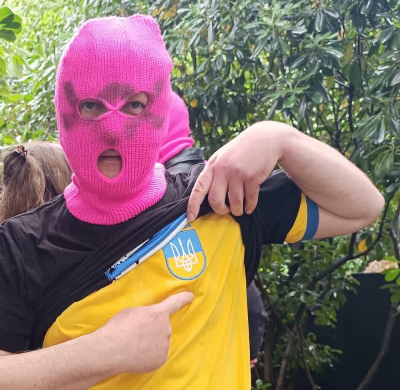
У день прев’ю конфлікт вийшов за межі кулуарних дебатів. Учасниці Pussy Riot провели протестну акцію біля російського павільйону. До них приєдалися активістки Femen з України. У рожевих балаклавах, із жовто-блакитними димовими шашками та українськими прапорами вони скандували антивоєнні й антиросійські гасла, називаючи павільйон прикладом «культури, яка продовжує обслуговувати режим». У цей час усередині відбувалася перформативна подія «Дерево, вкорінене в небі» — медитативна інсталяція з елементами застілля, музики й символічної «слов’янської гостинності». Саме цей контраст між атмосферою майже святкового перформансу та війною в Україні став центральним об’єктом критики протестувальників.
Президент Бієнале П’єтранджело Буттафуоко, попри хвилю критики, від рішення не відмовився. Водночас організатори спробували мінімізувати ризик політичного скандалу та можливих санкцій із боку європейських інституцій: російський павільйон вирішили відкрити лише на дні професійного прев’ю для журналістів та кураторів. Після 9 травня простір залишатиметься закритим для широкої публіки, а сам проєкт демонструватимуть у форматі зовнішньої відеопроєкції. Чи задовольнить такий компроміс Брюссель — поки незрозуміло. У кулуарах Бієнале вже говорять про ризик нового витка конфлікту між європейськими культурними інституціями та організаторами форуму.
Протести цього дня не обмежилися лише російським павільйоном. Біля павільйону Ізраїлю зібралися близько двохсот учасників акції, організованої альянсом митців проти геноциду. Учасники закликали до нової демонстрації у Венеції 8 травня. Додаткову хвилю дискусій викликав і павільйон США через участь скульптора Алма Аллен, якого публічно підтримував Дональд Трамп. Отже, Венеційська бієнале 2026 відкрилася не стільки як головна мистецька подія року, скільки як дзеркало глобальної політичної тривоги — простір, де мистецтво дедалі важче відокремити від війни, дипломатії та культурного бойкоту.
Biennale 2026 Opens Amid Protests and Growing Controversy Over the Russian Pavilion
Tensions surrounding the Venice Biennale had been building long before its official opening. The return of the Russian Pavilion to the public programme after years of international isolation became one of the most divisive issues in Europe’s cultural sphere during the run-up to the exhibition. Debates over the line between art and politics, the role of culture during wartime, and whether Russian state-linked institutions should be present at major international events gradually became the defining fault line of this year’s Biennale.
By preview day, the dispute had moved beyond private conversations and into the streets. Members of Pussy Riot staged a demonstration outside the Russian Pavilion, joined by activists from the Ukrainian feminist movement Femen. Wearing pink balaclavas and carrying Ukrainian flags amid clouds of yellow and blue smoke, the protesters chanted anti-war and anti-Russian slogans, describing the pavilion as an example of “culture continuing to serve the regime”.
Inside the pavilion, meanwhile, visitors encountered The Tree Rooted in the Sky, a meditative performance-installation built around ritual, music and gestures of symbolic “Slavic hospitality”. For critics of the project, the contrast between the atmosphere of near celebration inside the pavilion and the ongoing war in Ukraine became impossible to ignore.
Despite mounting criticism, Biennale president Pietrangelo Buttafuoco has stood by the decision to include the Russian Pavilion. Organisers have nevertheless attempted to limit the political fallout and the possibility of sanctions from European institutions by restricting access to the pavilion during the professional preview days reserved for journalists and curators. After 9 May, the space itself will remain closed to the general public, while the project will only be accessible through an external video projection. Whether such a compromise will satisfy Brussels remains unclear. Conversations across the Biennale already point to the possibility of a wider conflict between European cultural institutions and the exhibition’s organisers.
The protests were not confined to the Russian Pavilion alone. Around 200 demonstrators gathered outside the Israeli Pavilion as part of an action organised by an alliance of artists protesting against genocide. Protest banners called for a further demonstration in Venice on 8 May. The US Pavilion also became the subject of debate following the participation of sculptor Alma Allen, who has publicly received support from Donald Trump. As a result, the 2026 Venice Biennale has opened less as a celebration of contemporary art than as a reflection of a deeply unsettled world — a space where art, war, diplomacy and cultural boycott have become increasingly impossible to separate.
1954