© theweek.com
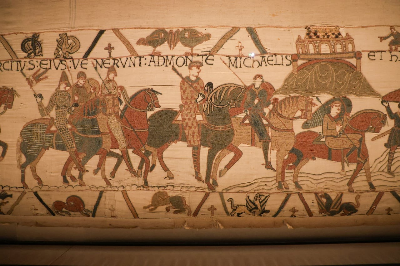
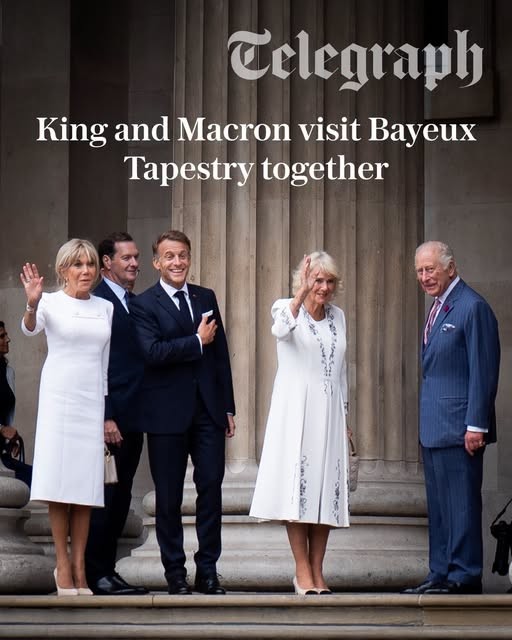
Після майже тисячі років у Франції Bayeux Tapestry знову опинився на англійській землі. 2 вересня його у Британському музеї побачили король Чарльз III та президент Франції Еммануель Макрон. Для музейного світу це подія виняткового масштабу: середньовічне полотно, яке розповідає історію нормандського завоювання Англії 1066 року, вперше від часу свого створення залишило Францію і прибуло до Великої Британії. Для британської преси це стало одним із головних культурних моментів року. The Guardian назвав Bayeux Tapestry захопливим і моторошним шедевром, який майже тисячу років потому не втратив здатності вражати глядача.
Смерть короля Гарольда (зображено стрілу в його оці), гобелен із Байо, Байо, Нормандія, Франція, Європа.
Фото: theweek.com
Повернення полотна до Англії не обійшлося без суперечок. Через вік і крихкість вишивки французькі реставратори та частина культурної спільноти побоювалися, що транспортування може завдати пам’ятці непоправної шкоди. Навіть британський художник Девід Гокні називав ідею позики безумством, посилаючись на фізичні та екологічні ризики перевезення. Для транспортування створили спеціальну захисну конструкцію, стійку до вібрацій, а сам переїзд став складною консерваційною операцією.
Масштаб інтересу до виставки перевершив звичайний музейний ажіотаж. Коли Британський музей відкрив продаж квитків, у віртуальній черзі одночасно перебували десятки тисяч людей, а стандартні квитки були розкуплені надзвичайно швидко. Саме тому поява Bayeux Tapestry у Лондоні стала не лише мистецькою подією. У момент, коли Велика Британія та Франція намагаються відновити тісніші відносини після Brexit, майже тисячолітня історія нормандського завоювання несподівано стала декорацією сучасної культурної дипломатії. Іронія в тому, що саме це полотно, яке розповідає про завоювання Англії, сьогодні об’єднало дві країни навколо спільної, хоча й далеко не безконфліктної, історії.
The Bayeux Tapestry: Almost 1,000 Years Later, Back in London
After almost a thousand years in France, the Bayeux Tapestry has returned to English soil. On 2 September, King Charles III and French President Emmanuel Macron viewed the historic work at the British Museum. For the museum world, it is an event of exceptional significance: the medieval textile, which tells the story of the Norman conquest of England in 1066, has left France for the first time since its creation. Its arrival in Britain has been hailed by the British press as one of the cultural highlights of the year. The Guardian described the tapestry as a compelling and haunting masterpiece whose power to astonish audiences has endured for nearly a millennium.
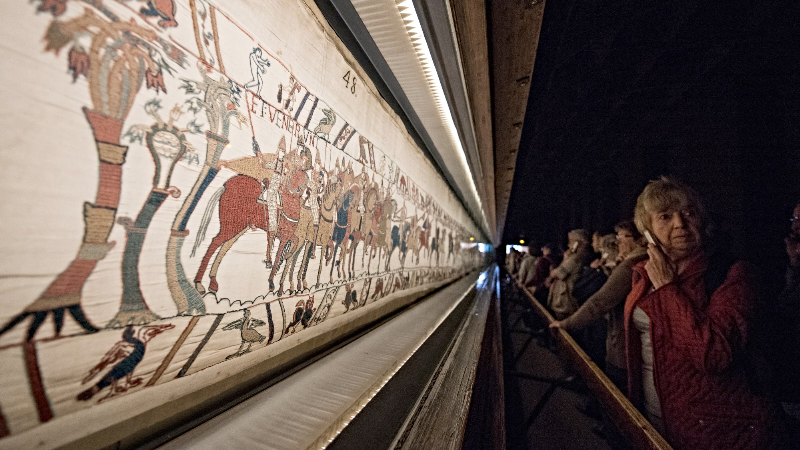
Despite its familiar name, the Bayeux Tapestry is not technically a tapestry in the traditional sense, but an extraordinary embroidered historical narrative. Measuring almost 70 metres in length, it is made from sections of linen joined together and covered with woollen embroidery. Hundreds of human figures, horses, ships, weapons and animals appear alongside Latin inscriptions, guiding the viewer from the events leading up to William of Normandy’s invasion to the Battle of Hastings. Its particular power lies in the way it tells a story: scenes unfold almost like frames in a film, combining political events with glimpses of everyday life, moments of humour and the brutal reality of medieval warfare.
Its return to England has not been without controversy. Given the age and fragility of the embroidery, French conservators and others in the cultural sector feared that transporting the work could cause irreversible damage. British artist David Hockney even described the proposed loan as “mad”, citing concerns about the physical and environmental risks involved. A specially engineered protective structure was developed to withstand vibration during the journey, turning the transfer itself into a major conservation operation.
The level of public interest has gone far beyond an ordinary museum opening. When the British Museum released tickets, tens of thousands of people entered the online queue, while standard tickets sold out remarkably quickly. The tapestry’s arrival in London is therefore more than a major art event. At a time when Britain and France are seeking to deepen their relationship after Brexit, an almost thousand-year-old story of conquest has unexpectedly become part of a new chapter in cultural diplomacy. There is a striking irony to it: the textile that chronicles the conquest of England has today brought the two countries together around a shared — and deeply contested — history.
72