© westculture.com.ua
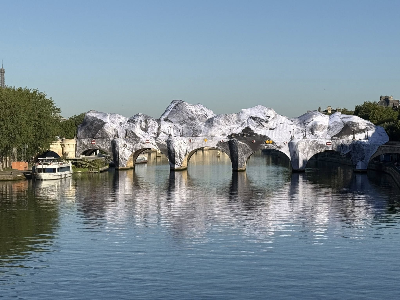
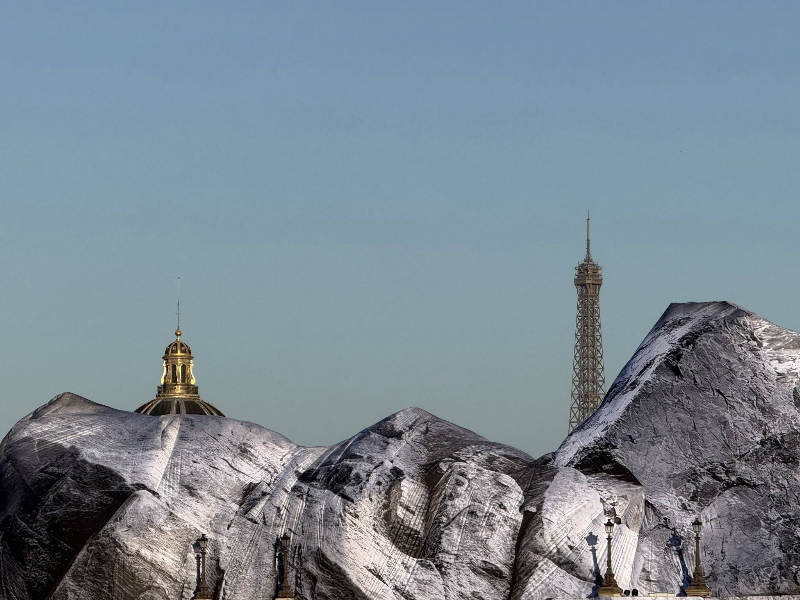
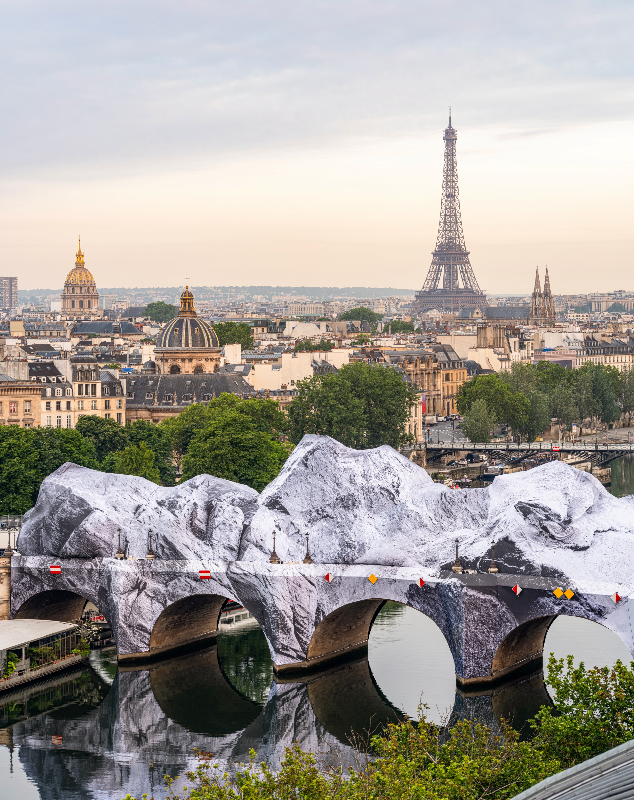
Французький художник Жан Рене (JR)в ніч з 20 на 21 червня знову перетворив Париж на простір великого публічного мистецтва — цього разу через масштабну інсталяцію «La Caverne du Pont Neuf», яка відкрилася на найстарішому мосту французької столиці. Проєкт уже називають однією з найрезонансніших культурних подій року у Франції — не лише через масштаб самої роботи, а й через символічний діалог із легендарним «Pont Neuf Wrapped» Крісто та Жанни-Клод. Які у 1985 році повністю «загорнули» Pont Neuf у спеціальну тканину золотисто-піщаного кольору. Для інсталяції використали близько 40 тисяч квадратних метрів тканини та кілька тонн сталевих тросів. Тоді проєкт готувався майже десять років. Тепер за задумом JR, Pont Neuf перетворися на гігантську «кам’яну печеру» площею близько 2400 квадратних метрів. Інсталяція працюватиме лише кілька тижнів — із 6 до 28 червня — і буде відкритою для відвідувачів цілодобово. Сам художник у пресрелізі наголошує, що його цікавить не лише візуальний ефект, а й сама здатність мистецтва змушувати місто переосмислювати звичний простір.
westсulture.com.ua
Французька преса вже проводить паралелі між новим проєктом JR та історичним «Pont Neuf Wrapped» 1985 року. Видання Le Monde пише, що йдеться не про буквальне цитування Крісто, а про «спробу заново відкрити ідею монументального мистецтва у публічному просторі Парижа». Оглядачі наголошують: якщо Крісто працював із тканиною та приховуванням архітектури, то JR — із трансформацією міського середовища у майже кінематографічний простір.
Видання La Croix у великому матеріалі мистецтвознавиці Мод Ґійбо (Maud Guilbeault) називає проект продовженням тієї лінії публічного мистецтва, яка зробила JR одним із найвідоміших contemporary artists Франції. Газета нагадує про його ключові проєкти — від «Face 2 Face» на ізраїльсько-палестинському кордоні до гігантських інсталяцій у Луврі та тюремному проєкті Tehachapi у Каліфорнії. На думку оглядачки, нова робота в Парижі знову демонструє головний принцип: мистецтво має існувати не лише всередині музею, а безпосередньо в міському житті.
www.timeout.com
Особливу увагу критики звертають і на культурний контекст проєкту. За останні роки Париж дедалі активніше повертається до формату масштабних public art installations, які працюють не лише як туристичні події, а як спосіб нового прочитання історичного міста. Проєкт реалізується без державного фінансування — його підтримують приватні партнери. Для французької культурної сцени це також важливий сигнал: великі публічні арт-ініціативи дедалі частіше виникають на перетині contemporary art, приватного меценатства та міського простору.
JR Artist
Критики вже звертають увагу на ще один важливий аспект: «La Caverne du Pont Neuf» з’являється у момент, коли Європа переживає новий інтерес до мистецтва тимчасових інсталяцій та site-specific projects. Після років домінування digital art і museum immersive experiences великі міські втручання знову повертають увагу до фізичного переживання простору — до мистецтва, яке існує тут і зараз, лише протягом короткого часу.
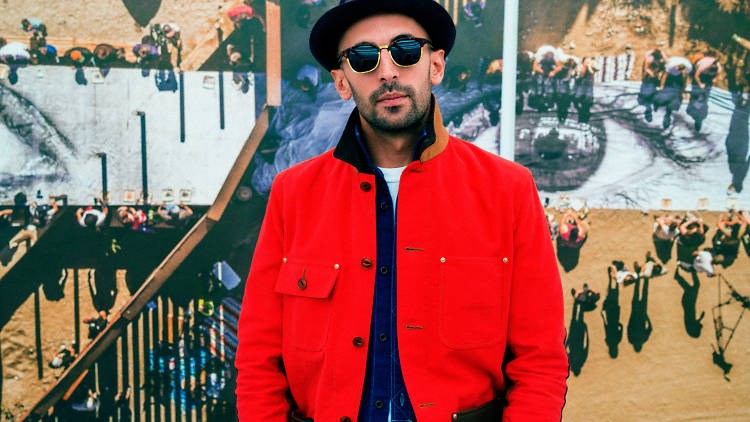
JR (справжнє ім’я — Жан Рене) — один із найвідоміших сучасних французьких художників, фотографів та авторів public art у світі. Він став міжнародно відомим завдяки гігантським фотографічним інсталяціям у міському просторі — на фасадах будівель, мостах, у фавелах, музеях, на кордонах і навіть у тюрмах. Його роботи поєднують фотографію, соціальний коментар, архітектуру та елементи перформансу. Світову популярність JR принесли проєкти: інсталяція на піраміді Лувру у 2016 році; масштабні проекти у Нью-Йорку, Ріо-де-Жанейро, Каліфорнії та Парижі.
Pont Neuf in Paris Has Been Transformed into a Giant Art Installation
once again turned Paris into a stage for monumental public art during the night of 20–21 June, unveiling La Caverne du Pont Neuf on the city’s oldest bridge. The project is already being described as one of France’s defining cultural events of the year — not only because of its scale, but also for its symbolic dialogue with the legendary Pont Neuf Wrapped by Christo and Jeanne-Claude. In 1985, Christo and Jeanne-Claude famously wrapped Pont Neuf entirely in golden sandstone-coloured fabric, using nearly 40,000 square metres of textile and several tonnes of steel cables. The installation took almost a decade to realise and remains one of the most influential public art interventions of the twentieth century.
JR’s new vision transforms Pont Neuf into what he describes as a monumental “stone cave” spanning approximately 2,400 square metres. The installation will remain on view from 6 to 28 June and will be accessible to visitors around the clock. In the project’s official press release, the artist stressed that his interest lies not only in visual spectacle, but in art’s ability to force a city to reconsider familiar spaces. French media have already drawn direct parallels between JR’s intervention and Christo’s historic 1985 project. Le Monde noted that the installation is “not a literal quotation of Christo, but an attempt to rediscover the idea of monumental art within the public space of Paris”. Critics point out that while Christo worked through concealment and fabric, JR approaches urban space as an almost cinematic environment shaped by transformation and immersion.
In a feature essay, art critic Maud Guilbeault writing for La Croix described the project as a continuation of the public art tradition that established JR as one of France’s leading contemporary artists. The newspaper revisited several of his landmark works, from Face 2 Face along the Israeli-Palestinian border to his large-scale installations at the Louvre Pyramid and the prison project Tehachapi in California. According to Guilbeault, the new Paris installation once again reinforces JR’s central artistic principle: art should not exist solely inside museums, but directly within urban life itself. Critics have also highlighted the broader cultural significance of the project. In recent years, Paris has increasingly returned to large-scale public art installations not merely as tourist attractions, but as a means of reinterpreting the historical city through contemporary artistic language.
The project has been realised without public funding and is supported entirely by private partners — a fact many observers see as emblematic of a wider shift within the French cultural landscape, where major public art initiatives are increasingly emerging at the intersection of contemporary art, private patronage and urban space. Commentators further note that La Caverne du Pont Neuf arrives at a moment when Europe is witnessing renewed interest in temporary installations and site-specific art. After years dominated by digital art and immersive museum experiences, large-scale urban interventions are once again restoring attention to the physical experience of space — art that exists here and now, only briefly, before disappearing. JR, whose real name is Jean René, is widely regarded as one of the world’s most prominent contemporary French artists and public art figures. He became internationally known for monumental photographic installations placed across urban environments — on building façades, bridges, favelas, museums, border zones and even prisons. His work combines photography, social commentary, architecture and elements of performance. Among the projects that brought JR global recognition are: his 2016 installation at the Louvre Pyramid; large-scale public interventions in New York City, Rio de Janeiro, California and Paris.
121