©
Невдоволення умовами навчання переросло у ширший суспільний рух. Французькі дослідники вбачають за ним не лише кризу освіти, а й тривогу цілого покоління, втрату довіри до інституцій та зміну форм політичного протесту. У вересні 2026 року у Франції почалася масштабна молодіжна мобілізація, яка згодом вийшла далеко за межі шкільних подвір’їв. Блокування ліцеїв, демонстрації та сутички з поліцією привернули увагу не лише медіа, а й дослідників суспільних рухів. У центрі дискусії опинилися питання, що стосуються майбутнього країни: чи може молодь розраховувати на соціальне просування, чи довіряє державним інституціям і чи здатна політична система почути покоління, яке дедалі гостріше відчуває невизначеність майбутнього?

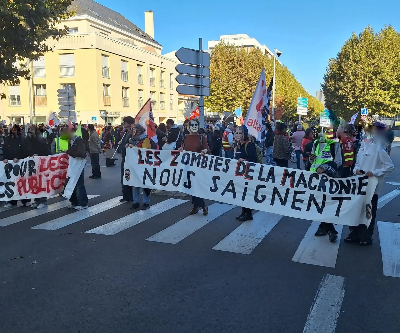
Молодіжна демонстрація в Парижі, 6 жовтня 2026 року. Фото: Benjamin Beraud / Hans Lucas via Reuters Connect
Французькі соціологи й політологи розглядають протест як прояв глибших суспільних суперечностей. Водночас вони застерігають від спрощень: масова мобілізація не означає, що всі її учасники мають однакові політичні погляди або поділяють ті самі вимоги. Перші блокування ліцеїв відбулися в другій половині вересня, зокрема в паризькому передмісті Сен-Дені. Згодом мобілізація поширилася на інші міста. Серед претензій учнів — нестача педагогів, відсутність заміни вчителям, які не можуть працювати, проблеми зі шкільною інфраструктурою та перевантажені розклади. Окреме джерело невдоволення — Parcoursup, французька платформа вступу до закладів вищої освіти, яку учні критикують за непрозорість і вплив на подальшу освітню траєкторію.
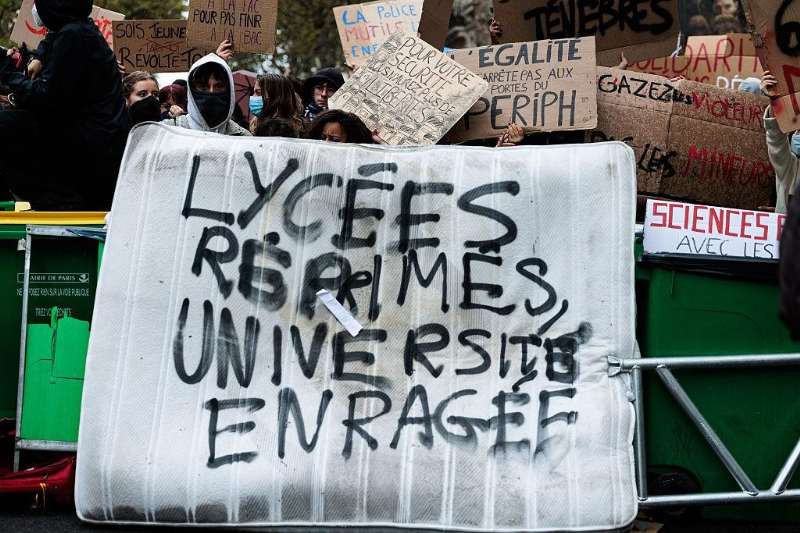
Зібрання ліцеїстів біля мерії Парижа, 13 жовтня 2026 року. Фото: Raphaël Fournier / Divergence Images.
Як пишуть оглядачі рух вирізнявся неоднорідністю та спонтанністю. У ньому брали участь учні різних типів навчальних закладів, а згодом до мобілізації долучилися студенти, викладачі, батьки та представники інших суспільних груп. Зауваження щодо умов навчання поступово переросли в дискусію про нерівність, державну політику та перспективи молодого покоління. Соціологиня й політологиня Анн Мюксель, директорка з досліджень Центру політичних досліджень Sciences Po, пропонує розглядати молодіжне невдоволення в ширшому суспільному контексті. «Масштаб ліцейного протесту відповідає рівню обурення, яке щодня проявляється в родинах», — пише дослідниця у Le Monde. За її оцінкою, молоді люди стикаються зі складнішими умовами професійного становлення, фінансової самостійності та доступу до житла, ніж їхні батьки. До цього додаються невизначеність щодо майбутнього ринку праці, вплив штучного інтелекту на професії та невдоволення алгоритмами Parcoursup. За таких обставин школа перестає сприйматися як безумовна гарантія соціального просування. Якщо освіта не забезпечує відчуття справедливих можливостей, невдоволення конкретними недоліками навчальної системи може перерости у втрату довіри до державних інституцій.

Французький антрополог Ален Берто
Антрополог Ален Берто, почесний професор університету Paris 8, дослідник міського насильства та сучасних повстанських рухів, закликає не зводити події до найпомітніших епізодів насильства: «Молодь вимагає життєвого горизонту — її приголомшує відчуття, що їй нічого не обіцяно» — зазначає він в інтерв’ю Télérama. На думку Берто, молодіжна мобілізація об’єднує людей із різним соціальним досвідом, але зі спільним відчуттям заблокованого майбутнього. Дослідник також звертає увагу на використання національної символіки. Французький вислів faire peuple у цьому контексті означає прагнення заявити про себе як про політичну спільноту, що претендує на право визначати власне майбутнє. Це не означає, що всі учасники протесту поділяють єдину ідеологію. Навпаки, неоднорідність руху є однією з його визначальних рис і водночас ускладнює прогнозування його подальшого розвитку.
Політолог Боріс Ґобій, викладач-дослідник Вищої нормальної школи Ліона, порівнює нинішню мобілізацію з протестами травня 1968 року. У колонці для Le Monde від 21 жовтня він сформулював головну відмінність так: «Різниця між травнем 1968-го та жовтнем 2026-го полягає в тому, що тоді повітря було червоним, а сьогодні воно коричневе». Метафора відображає відмінність політичного клімату. Травень 1968 року асоціюється з впливом лівих ідей, тоді як нинішні події відбуваються на тлі зростання підтримки правих і крайніх правих сил. Ґобій водночас бачить паралелі між двома протестними хвилями у способах мобілізації: блокуваннях, поширенні гасел і символів, залученні нових груп та поступовому розширенні вимог. Локальна проблема може стати приводом для ширшої дискусії про суспільний лад і те, яким має бути майбутнє країни.

Соціологи й політологи наголошують: сучасні протестні практики формуються у взаємодії між демонстрантами та поліцією. Мирні марші можуть співіснувати в межах однієї мобілізації із сутичками, пошкодженням майна та пограбуваннями. Проте такі епізоди не доводять, що всі учасники протесту мають однакові наміри або підтримують насильство. Автори закликають обережно ставитися до спроб визначити склад руху та мотиви його учасників без відповідних соціологічних досліджень. Саме взаємодія різних груп, а також реакція правоохоронців впливають на те, як змінюються форми колективної дії.
What Lies Behind France’s Mass Youth Protests? Sociologists and Political Scientists Seek Answers
Discontent over conditions in the education system has grown into a broader social movement. French researchers see the protests as reflecting not only a crisis in education, but also a generation’s anxieties, declining trust in institutions and changing forms of political protest. A large-scale youth mobilisation began in France in September 2026 and soon spread well beyond school gates. School blockades, demonstrations and clashes with police attracted the attention not only of the media but also of researchers studying social movements. At the heart of the debate are questions about the country’s future: can young people still expect to improve their social prospects? Do they trust public institutions? And is the political system capable of listening to a generation increasingly troubled by uncertainty about what lies ahead?
French sociologists and political scientists view the protests as an expression of deeper social tensions. At the same time, they caution against oversimplification: mass mobilisation does not mean that all those taking part share the same political views or demands.The first school blockades took place in the second half of September, notably in Saint-Denis, a suburb of Paris. The mobilisation subsequently spread to other cities. Students’ grievances include teacher shortages, the failure to provide cover for absent staff, inadequate school facilities and overloaded timetables. Another source of discontent is Parcoursup, France’s university admissions platform, which students criticise for its lack of transparency and its influence on their future educational prospects.
Commentators have described the movement as heterogeneous and spontaneous. It brought together pupils from different types of schools, with university students, teachers, parents and members of other social groups joining the mobilisation later on. Complaints about learning conditions gradually developed into a wider debate about inequality, government policy and the prospects facing the younger generation.Anne Muxel, a sociologist and political scientist who directs research at Sciences Po’s Centre for Political Research (CEVIPOF), argues that young people’s discontent should be viewed in a broader social context. “The scale of the school protests reflects the level of anger that is expressed every day in families,” she writes in Le Monde. In her assessment, young people face greater obstacles to establishing careers, achieving financial independence and securing housing than their parents did. These difficulties are compounded by uncertainty over the future labour market, the impact of artificial intelligence on jobs and dissatisfaction with Parcoursup’s algorithms.
In these circumstances, education is no longer seen as an unconditional guarantee of upward social mobility. When the education system fails to offer a sense of equal opportunity, frustration with its specific shortcomings can develop into a broader loss of confidence in public institutions.Alain Bertho, an anthropologist, emeritus professor at Paris 8 University and a researcher of urban violence and contemporary protest movements, urges observers not to reduce the events to their most visible episodes of violence. “Young people are demanding a horizon for their lives — they are stunned by the feeling that nothing has been promised to them,” he says in an interview with Télérama.
Bertho argues that the mobilisation brings together people with different social backgrounds but a shared sense that their future is blocked. He also draws attention to the use of national symbols. In this context, the French expression faire peuple refers to an effort to assert oneself as a political community entitled to shape its own future. This does not mean that all protesters subscribe to a single ideology. On the contrary, the movement’s diversity is one of its defining features — and one of the reasons its future course is difficult to predict.Political scientist Boris Gobille, a lecturer and researcher at the École normale supérieure de Lyon, compares the current mobilisation with the protests of May 1968. In an opinion piece published in Le Monde on 21 October, he summed up the key difference: “The difference between May 1968 and October 2026 is that back then the air was red, whereas today it is brown.”
The metaphor points to a shift in the political climate. May 1968 is associated with the influence of left-wing ideas, while the current protests are unfolding against a backdrop of growing support for right-wing and far-right forces. Gobille nevertheless sees parallels between the two waves of protest in the methods of mobilisation: blockades, the spread of slogans and symbols, the involvement of new groups and the gradual broadening of demands. A local grievance an become the starting point for a much wider debate about the social order and the kind of future the country should pursue.
Sociologists and political scientists stress that contemporary protest practices take shape through the interaction between demonstrators and the police. Peaceful marches can coexist within the same mobilisation with clashes, property damage and looting. Such incidents, however, do not demonstrate that all protesters share the same intentions or support violence.The researchers urge caution when attempting to define the movement’s composition or establish the motives of those taking part without appropriate sociological evidence. It is the interaction between different groups, together with the response of law enforcement, that helps determine how forms of collective action evolve.
89